



Tax Strategy
Caroola Group Tax Strategy FY26
Introduction
This document, approved by the board of Caroola Group Limited, sets out the Group’s approach to conducting its tax affairs and dealing with tax risks, and is made available to all the Group’s stakeholders. This document will be periodically reviewed by the Senior Accounting Officer and any amendments will be approved by the board of Caroola Group Limited. It is effective for the year ending 31 October 2026 and will remain in effect until any amendments are approved by the board of Caroola Group Limited.
This tax strategy document is compliant with the requirements of Schedule 19 of Finance Act 2016.
Caroola Group is committed to:
- Following all applicable laws and regulations relating to its tax activities;
- Maintaining an open and honest relationship with the relevant tax authorities based on collaboration and integrity;
- Applying diligence and care in our management of the processes and procedures by which all tax related activities are undertaken, and ensuring that our tax governance is appropriate;
- Using incentives and reliefs to minimise the tax cost of conducting our business while ensuring that these reliefs are not used for purposes which are knowingly contradictory to the intent of the legislation.
Approach to risk management and governance
The Board is responsible for the Group’s tax strategy and policies and has delegated responsibility for the implementation within the Group to the Chief Executive Officer.
The Chief Executive Officer (who is also our Senior Accounting Officer) delegates the day-to-day management of our tax affairs to our Group finance team. Individual roles and responsibilities are clearly defined, and our managers are authorised to make decisions and sign filings and other documents in relation to our tax affairs, within specified thresholds. There is a process to ensure that decisions are taken at appropriate levels across the Group and at a Company level.
The Group considers that it has a low-risk appetite in relation to tax matters and only utilises relevant tax reliefs and allowances in the manner intended by the legislation.
Managing the Group’s own tax affairs is a complex process across many functional areas of the business and as such there will inevitably be risks of error or omission within those processes (Tax Risks) which may result in the incorrect application of tax rules or calculation of tax returns. Eliminating tax risks entirely is impossible, therefore the Group’s attitude towards the level of control required over the processes designed to reduce these Tax Risks is driven by the likelihood of occurrence and scale of impact of each Risk.
The Umbrella segment of the Group is complex and results in significant amounts of payroll taxes being incurred. As a result, the Group has a robust risk management process in place to ensure compliance in this area.
The Board is ultimately responsible for identifying the risks, including tax risks, which need to be addressed and for determining what actions should be taken to manage those risks, having regard to the materiality of the amounts and obligations in question.
The identified Tax Risks are then assessed on a case-by-case basis, allowing the Group to arrive at well-reasoned conclusions on how each individual Risk should be managed. Where there is any uncertainty in how the relevant tax law should be applied, external advice may be sought to support the Group’s decision-making process.
When reviewing the Tax Risks associated with a specific decision or action, the Group ensures that the following are considered:
- The legal and fiduciary duties of directors and employees.
- The requirements of any related internal policies or procedures.
- The maintenance of the Group’s corporate reputation, having particular regard to the way we interact with the communities around us.
Umbrella Sector reforms
From April 2026, the UK umbrella sector will see its most significant reform in decades. Under the new Joint and Several Liability (JSL) model, recruitment agencies and end clients become legally responsible for unpaid payroll taxes if an umbrella fails to meet its obligations. Parasol welcomes these changes, which strengthen industry standards, protect workers, and drive out non‑compliant providers. As a founding member of the FCSA with over 20 years of experience, we remain committed to delivering compliant, transparent, and financially secure payroll solutions.
The reforms shift accountability up the supply chain, making robust compliance essential for all parties. The Group ensures full transparency through clear, payslip‑level deductions, prompt payment of all PAYE and NIC liabilities, and strong financial controls supported by regular audits, FCSA accreditation, and SafeRec partnership. To provide added reassurance, agencies will receive monthly financial assurance updates, including key business developments and current credit risk ratings.
The Group is fully prepared for JSL and ready to support agencies and clients through the transition, offering proven compliance, transparent operations, and the financial strength needed to meet the new regulatory standards with confidence.
Attitude towards tax planning
The Group’s tax planning aims to support the commercial needs of the business by ensuring that the group companies affairs are carried out in the most tax efficient manner whilst remaining compliant with all relevant laws. Tax is a consideration when navigating commercial decision-making processes. The Group finance team is therefore involved in all commercial decision-making processes and provides appropriate input into business proposals to ensure a clear understanding of the tax consequences of any decisions made.
Internal governance is not prescriptive on the levels of acceptable risk but, in practice, where there is a material doubt as to the tax treatment of any particular transaction or where the tax guidance is unclear or the Group does not feel it has the necessary expert knowledge to assess the tax consequences adequately, external advice may be sought to support the Group’s decision making process and/or the Group will seek to resolve the uncertainty by dialogue with tax authorities.
We do not enter into artificial arrangements in order to avoid taxation nor do we utilise companies incorporated in “tax havens” as a means of reducing the Group’s tax liabilities.
As at 31 October 2025, all Group companies are incorporated in England and are therefore subject to full UK tax.
Approach towards dealings with HMRC
The Group is committed to the principles of openness and transparency in its approach to dealing with HMRC, and in particular the Group commits to:
- Make fair, accurate and timely disclosure in correspondence and returns, and respond to queries and information requests in a timely fashion;
- Seek to resolve any issues with HMRC in a timely manner, and where disagreements arise work with HMRC to resolve issues by agreement where possible;
- Be open and transparent about decision-making, governance and tax planning;
- Reasonably believe that transactions are structured to give a tax result which is not inconsistent with the economic consequences (unless specific legislation anticipates that result), nor contrary to the intentions of Parliament;
- Interpret the relevant laws in a reasonable way, and ensure transactions are structured consistently;
- Ensure all interactions with HMRC are conducted in an open, collaborative and professional manner.
Signed on behalf of Caroola Group Limited
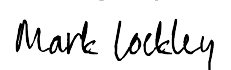
Mark Lockley
Chief Finance Officer (and Senior Accounting Officer)